Outsourcing
Learnings from one of the most successful BPOs in the world
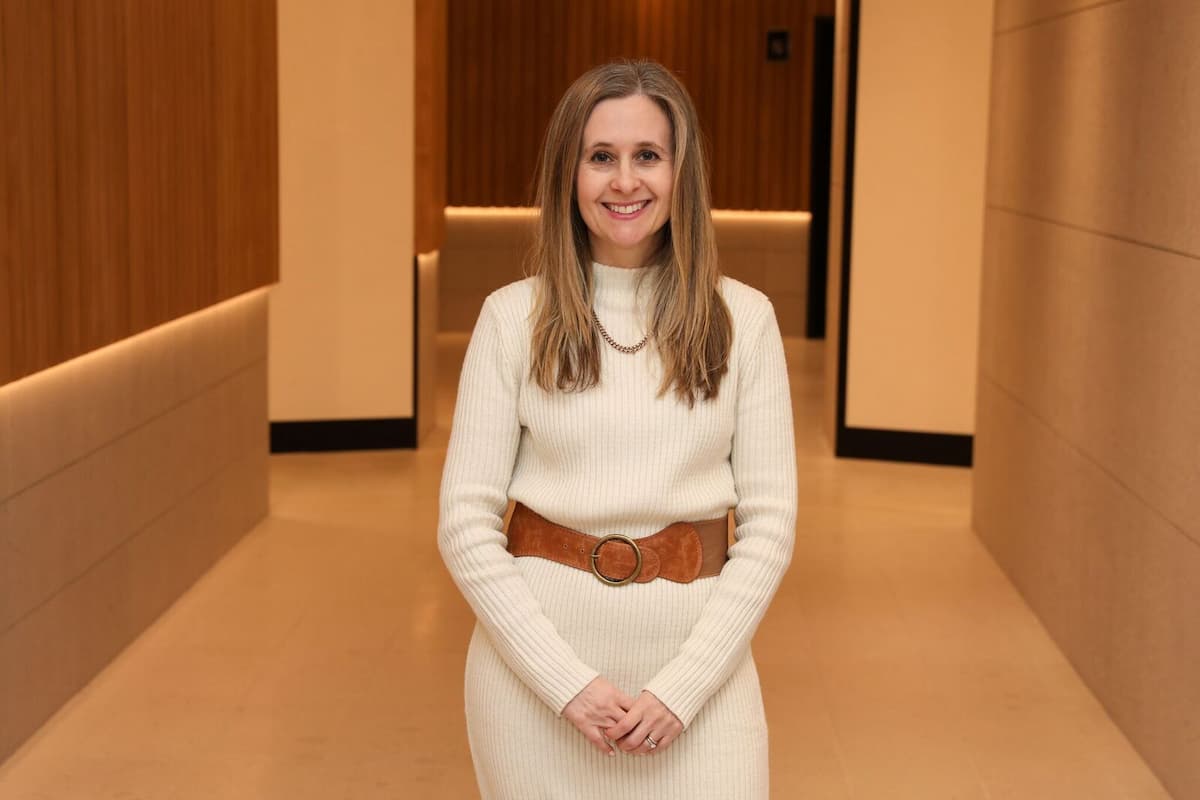
I had the privilege of working for one of the most successful BPOs (business process outsourcing companies) in the world* for 15 years, working my way up from Japanese-speaking call centre agent to Senior Vice President, International, based in New York. During that time, the BPO grew from 60 to 1000 people and IPOed. Today, they’re traded on the Tokyo stock exchange, and have grown to almost 6,000 employees, continuing to outperform nearly every BPO in the world on a market cap per employee basis – by a long stretch. Why are they so valued and profitable? This blog provides some answers.
Market cap per employee comparison
First, a quick look at the data. TP and Concentrix are two of the largest, most sophisticated global BPOs, and according to publicly available data as of Feb.15, 2026, their market caps are in the vicinity of A$5 billion (3 billion euro) and A$2.7 billion (US$1.89 billion) respectively. With 500,000 and 450,000 employees, this puts their market cap per employee at around A$10,000/A$6,000. By comparison, the Japanese BPO I worked for has a market cap of around A$800 million (87 billion yen), implying a market cap of A$133,000 per employee. That’s more than 13 times higher than the big global players. Here’s my theory on how this has come about.
 Register for BPO Exchange
Value-added services
BPO is an intensely competitive industry, and truly a buyer’s market with so many great vendor options for services such as contact centre, accounting, HR, procurement, administrative tasks and analytics. Most BPOs can articulate well their offerings in these areas, and most provide hourly or monthly rates per FTE as the pricing model. Straightforward. But unfortunately so straightforward that the pricing can easily be dissected by clients which tends to result in low profit margins.
But what if the services transcended what the client asked for in the RFP, and the BPO made suggestions for more services which helped the client and its executive team reach their over-arching business goals? To truly do this effectively, the BPO needs to take the time to understand their client’s business deeply – their drivers, KPIs, budgeting cycle and mechanics, growth goals, industry dynamics, market positioning and competitors. This knowledge can then be used to inform proactive proposals for new services.
But client intimacy typically goes beyond the sales person speaking to their operational counterpart; it requires relationships at a senior level between the client and the BPO.
It often results in discussion of services which are bespoke, in an entrepreneurial spirit, and not something a salesperson can commit to.
That’s why I’d bring in my CEO from Japan to orchestrate meetings at the C-level with clients in the U.S. With a focus on retail, we had Tier 1 clients like Saks Fifth Avenue, Bloomingdales, Neiman Marcus Direct, Victoria’s Secret and Coach. They all wanted contact centre services in Japan, taking advantage of a boom in cross-border retail (a highly favorable exchange rate meant it was much cheaper for consumers to order a luxury handbag directly from the US than go to a Japanese department store). We had 60 agents taking requests for the Victoria’s Secret catalog alone! But through various meetings, we spotted an opportunity to add further value to these clients, who had a number of pain points entering the Japanese market.
For a start, Japanese consumers are highly discerning – even the tiniest fault would result in return merchandise, the extent to which our clients were not expecting. We offered to set up an in-country return merchandise processing facility, on-site with the contact centre. The local returns point removed a friction for consumers who didn’t want to have to send items back overseas.
Another potential point of friction was that merchandise pricing was in USD, and so we suggested enabling a yen payment solution to test consumer response. One client immediately jumped on board.
Perhaps the most impactful value-add service we offered was marketing assistance. All these US retailers were ambitious about growing in Japan but their teams didn’t have knowledge of the Japanese landscape, language or the growth team to support. Some hired Japan-based advertising agencies. We proposed an additional solution – facilitating partnerships with our other clients. Specifically, we tapped into relationships with credit card issuers that had millions of members, and got meetings with them for the US retailers. Not only did we arrange the meetings, we participated in them as an advisor and interpreter. I was excited to interpret from Japanese to English for the Chairman and CEO of Saks, amongst others.
These meetings resulted in successful marketing partnerships, generating significant numbers in customer acquisition and revenues which our clients were incredibly grateful for. There was an upside for us too, as the marketing generated a lot more traffic for our contact centre.
From marketing support to local currency and returns processing, these value-added services transformed our initial contracts for outsourced contact centre services into sticky, strategic partnerships.
Needless to say, our clients didn’t defect to competitors, and our healthy profit margins were preserved.
Productisation and packaging
The next stage of evolution from offering individual value-added services is putting them together as products. When a packaged up product strikes market fit, the potential for high margins is high – because clients can’t unpick the pricing, and sometimes because the product is an original bundling which no-one else is offering. The pricing model is often outcome based, or per member, employee or customer.
You could argue that payroll-as-a-service, charged per employee per month, is a product, for example, which BPO behemoths like ADP offer. Lately the trend is for traditional BPO services to be bundled with technology solutions, such as conversational AI and analytics, creating a new wave of productisation – and those big BPOs I mentioned earlier are leading the way.
The Japanese BPO was a master of productisation, decades earlier.
They went deep into specific verticals, such as travel, automotive and financial services, and developed products aligned with unique industry needs, starting with customer service, and expanding outwards.
Three examples of products they pioneered were concierge services (sold to credit card companies), roadside assistance (sold to automotive companies), and emergency assistance (sold to travel insurance companies).
The idea for concierge services came out of meetings with credit card issuers in the 1990s about the need for them to differentiate and offer a higher level of service to retain top cardmembers. This started with a 24×7 contact centre where agents were trained to provide a large range of services in the customer’s language, from securing tickets to concerts or bookings at hard-to-get-into restaurants, to providing travel information and reservations. From there, the offering naturally evolved into the establishment of a network of preferred relationships with a huge variety of merchants at major destinations around the world. Clients were no longer buying just an outsourced contact centre service, rather access to priceless deals and venues valued by cardmembers.
I went on to sell (offsite) concierge services to hotels in Australia and luxury high-rise apartment developers in New York.
Similarly, the roadside assistance service, which started with a team of highly skilled contact centre agents, many of whom had training as mechanics, evolved into something much broader: a national network of repair centres, and the addition of a fleet of motorbikes and other vehicles to provide assistance to our auto clients’ customers when they broke down on the road. Clients were happy to pay an annual per customer fee for the roadside “product”, as that was the best fit for their budgeting process.
The third example is emergency assistance offered to travel insurance policyholders – again, a 24×7 in-language contact centre was at the heart of this product, but it was backed by a proprietary global database of doctors and hospitals where Japanese was spoken. When QBE entered the Japanese travel insurance market, they became our first Australian client. As we were handling calls regarding travel insurance claims (such as illness or accident related), a natural extension of the product was to actually process the claims. The product became richer, and so too did the relationship with our clients become stronger.
Advice
My advice to BPOs looking to retain their clients longer and increase their profit margins is: get creative with product development! Sure, you can differentiate by specialising in a niche, or with a novel AI approach. But nothing beats an original product, tailor-made to help businesses in a particular industry achieve sales and service success. It’s not easy, and that’s why so few BPOs are doing it, but it’s an opportunity the market can further leverage, against a backdrop of declining BPO valuations and increased competition.
*The Japanese BPO referenced is Prestige International.
Last updated on: March 2, 2026