Technology
Voice AI – industry-specific use cases for the service channel to watch in 2026
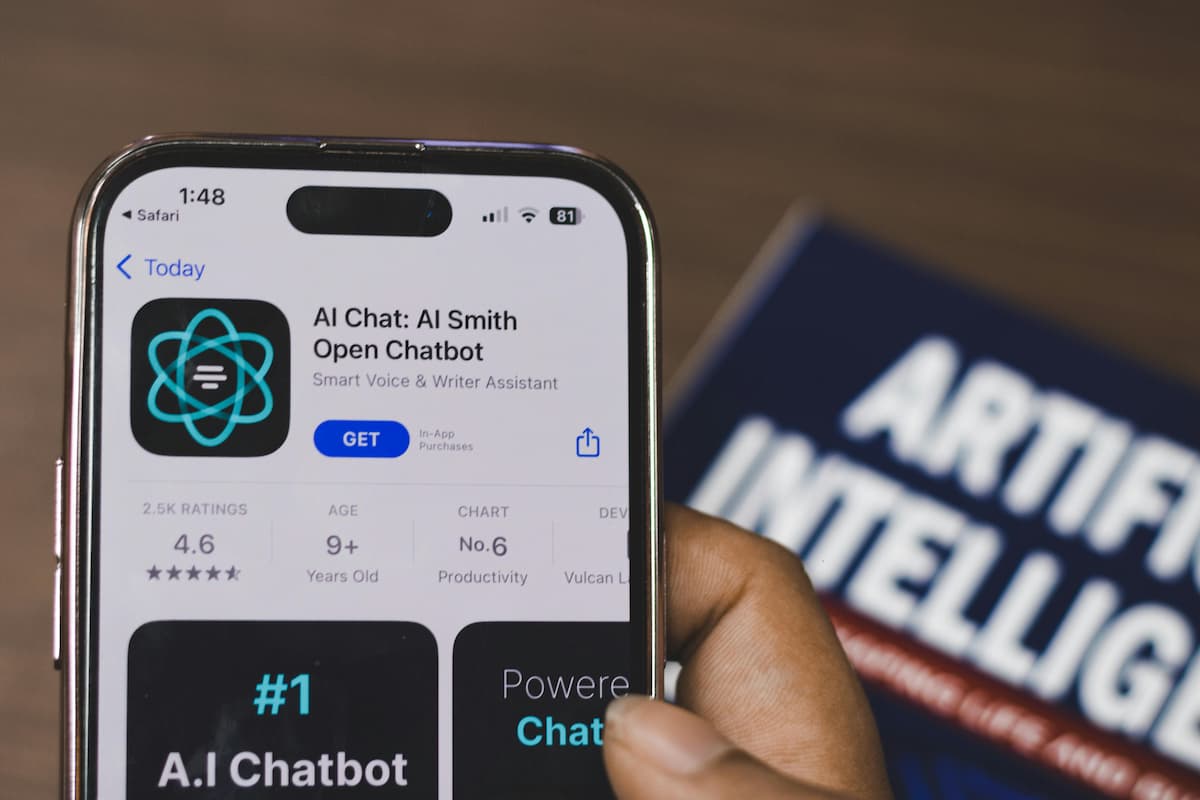
In the race to automate customer service, Voice AI is the channel to watch in 2026. While many businesses focused on launching and optimising their text-based chatbots over the last few years (with mixed results), voice-based bots have had less attention. Gartner research in 2024 revealed just 5% of businesses had deployed Voice AI while 55% were piloting or exploring it. 2026 is already looking different, as telcos, banks, insurers and others dump the IVR menus so dreaded by consumers (“press 1 for sales, 2 for service”), replacing them with conversational AI agents. No more waiting for the “next available [human] agent”, just instant service.
Sounds great in theory – customers are happier with on-the-spot service, no matter what time of the day or night, and businesses benefit big-time from cost savings, with a reduced need for human agents.
But in practice, it’s not quite that simple, and there are many nuances to planning a successful voice bot implementation. For a start, while customers write messages to chatbots that are clean for a machine to interpret, on the phone, customers, both native and non-native speakers of English, have a range of accents which can be trickier for a bot to decipher. This can increase customer frustration. Secondly, when humans have a conversation, there’s no delay as one person responds to the other, and there’s an expectation that voice bots mimic this zero latency. Compare that to a text-based chatbot, where customers are used to – and are generally fine with – 1-2 second delays in responses.
Conversation flow is a challenge for voice bot service designers – when to know a customer has finished speaking, whether it’s appropriate to interrupt them, and how to address a pregnant pause. Authenticating customers on the voice channel, for example using biometric data, can also be more complex.
On top of all that, voice is the customer’s channel of choice for issues that are emotional, urgent or complex, so the stakes are higher than text-based interactions. It’s essential to offer customers the option of a human hand-off as the technology is still evolving.
Conversational AI expert Bora Wiemann (who leads CBA’s chatbot) says, “In addition to being more technically challenging, designing well-performing voice bots requires more human expertise than a [text] chatbot – which is probably why many companies are putting them into the “later” basket. But there are many vendors that have created great ready-to-go solutions that this shouldn’t stop you. And given most companies have experienced by now that calls are not going away, voice bots are an investment that will provide its ROI many times over.”
Wiemann’s advice is to “focus first on call length reduction before thinking of automation. Easier targeted routing, IDV, basic data collection are a great start. A common next phase is basic status updates, but don’t be surprised if that status is just the start of their reason to call. My biggest call-out: go-live is only the halfway mark, and there’s always lots of optimisation work before it’s a truly smooth customer experience.”
For all these challenges, there are solutions, and the business case for Voice AI is powerful across so many customer service settings.
 Get a quote for Voice AI solutions
Industry-specific use cases
Here are some use cases for 5 sectors.
-
Financial services sector
Banks can use voice bots to help customers with queries around transactions. It’s particularly valuable in mobile banking where a customer can speak hands-free while looking at their phone. The same applies in insurance, where customers can ask about their claim status, and if any further information is required.
CBA, ANZ and Suncorp are all examples of companies invested in voice biometrics and AI-driven conversational customer support.
-
Care sector (health, aged care, social services)
One of the earliest Australian examples of a successful voice bot in health care was during the pandemic, when the Queensland Government spun up a service to manage the influx of Covid-19 inquiries. This took pressure off overwhelmed contact centres and helped citizens decide whether to seek emergency help, stay isolated, or just schedule a tele-consultation with their GP. And that was before the advent of GenAI tools like ChatGPT!
Voice AI is now showing up in so many aspects of health care, from appointment scheduling and triage and symptom checking to post-discharge follow-ups.
Uniting Care rolled out “Jeanie” AI Agent, “providing information on service eligibility and updating personal details to directing clients to the most appropriate human agent for specialized support”.
Perhaps one of the most surprising aspects of the Uniting case study is that Voice AI has been embraced by aged care residents, who are more comfortable speaking to the AI than engaging with the text-based chatbot on an iPad – debunking the myth that voice AI is just for the young!
Visually impaired patients can also use Voice AI, making the system more inclusive.
-
Ecommerce
Customers can use Voice AI to order, and to track their shipment, not to mention liaise with the bot to get help returning an item of merchandise that wasn’t quite right.
The big supermarket chains are investing in a variety of AI projects. As a start, Woolworths’ Gemini-powered “Olive” bot allows customers to use voice commands to add items to their shopping carts.
-
Telecommunications & Utilities
Virtually every household has a relationship with a telecommunications and energy provider, so the volumes of customer interactions in these sectors is huge.
Both Telstra and AGL Energy have implemented voice AI to streamline service – to help customers resolve faults, billing issues, payments and to give status on outages.
-
Sales
Sales is not really a sector, but I’ve included it because it’s such a low-hanging fruit for voice AI – whether that’s scheduling appointments or demos via an inbound or outbound call, or running a survey to collect verbatim customer feedback post-sale.
I recently received a cold call from a BPO who wanted to set up an exploratory call with me and I suggested they email me information first. It was so effective that it wasn’t until the end of the call that I realised I was talking to a bot. From an efficiency perspective, the bot did its job, although I was left with mixed feelings about the experience, because I would have preferred that the bot identify itself upfront. With this small tweak, the lead generation for this BPO could be scaled like never before.
Voice AI pricing
The most common pricing models for Voice AI are per minute, per resolution, per call, and per seat per month, with telephony sometimes billed separately. There is a lot of variation in both capability and pricing across vendors.
Conclusion
In conclusion, voice AI is no longer a niche technology. When implemented well, it can be embedded in the sales and service strategy across so many industries, enabling consumers – young and old – to get answers fast, while freeing up the human contact centre workforce to help customers where emotion, complexity and empathy reside.
Last updated on: April 6, 2026